Much, almost too much, has been said about the Macedonian issue – namely, about whether the newly-founded state of the Former Yugoslav Republic of Macedonia (FYR Macedonia) should be called simply “Macedonia” or whether it should use a composite name that incorporates a geographical or other distinction. Sadly enough, after all that has been said and done, the two sides have simply failed to communicate on what should have been a relatively straightforward and amicable agreement.
The Greek Side
When the Macedonia issue first became a public matter following the dissolution of Yugoslavia, Greeks, with their short temper and cultural sensitivity, took to the streets chanting “Macedonia is Greek” and focusing immediately and almost exclusively on the Greekness of ancient Macedonia and of Alexander the Great. Before long, any Greek government would be committing political suicide if it dared challenge this furious public sentiment.
Is
Greeks are proud people, highly protective of their 4000 year-long culture and civilization. History is taught to elementary school children starting from pre-historic times and progresses gradually towards modern times as the children move through junior and then senior high school.
This “gap” in Greek history lessons is not completely puzzling. As the
The Failure to Communicate
As focused as the Greeks are on their ancient Macedonian roots, the FYR Macedonians who fought unsuccessfully for independence after the collapse of the
To deal with Greek claims that Slav-Macedonians are not Macedonian because ancient Macedonians were Greek, Slav-Macedonians started toying with history.
FYR Macedonian interests would have been far better served if they engaged in a frank dialogue about how they have lived in the
What Both Sides Need to Understand
In order to close the communication gap, people on both sides (especially the younger generation) need to firstly educate themselves on the state of the Macedonia region circa 1900 and subsequent events:
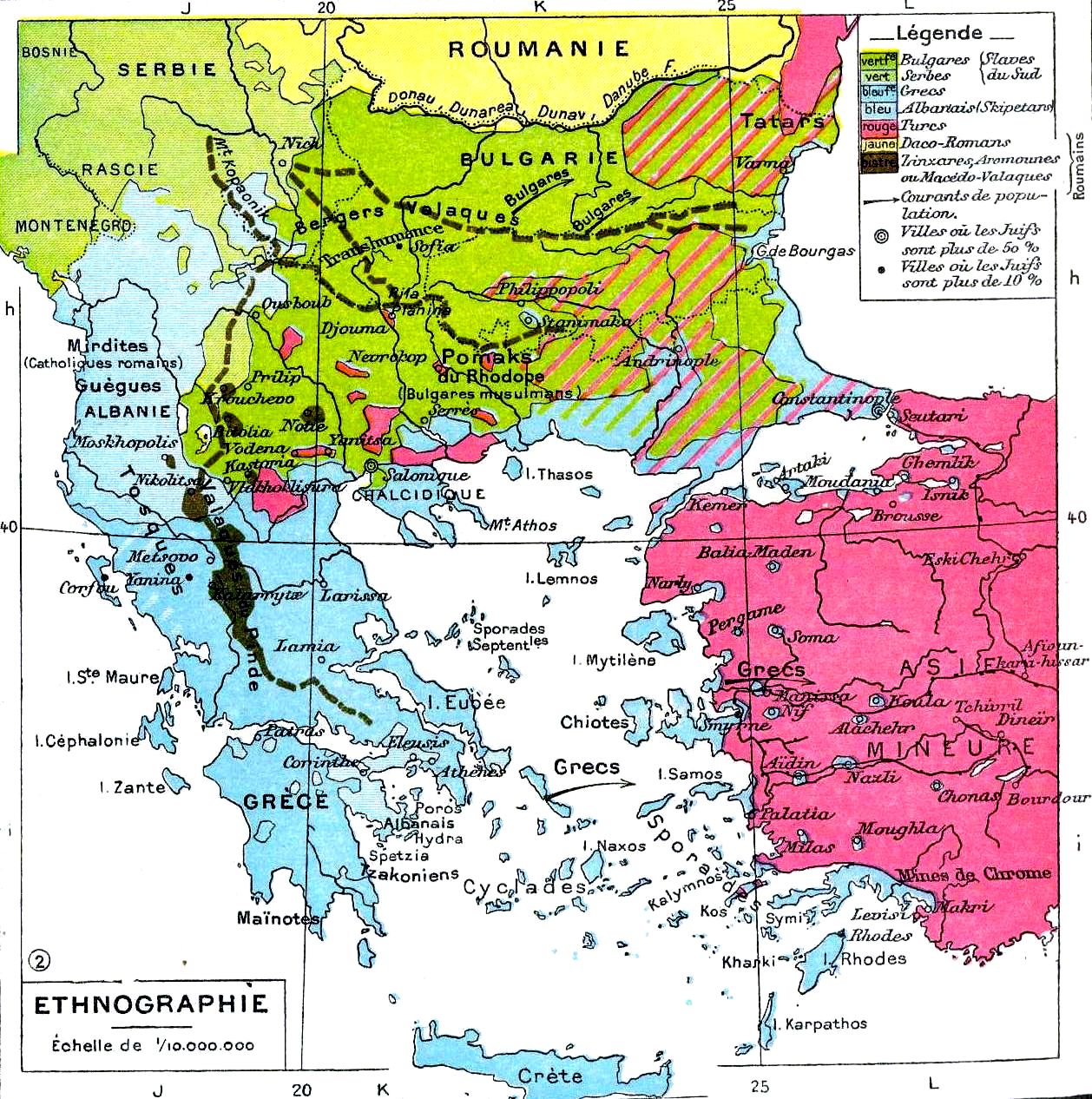
The Greeks shudder at the very sound of the word "Macedonian" being used in reference to anything non-Hellenic. The fact of the matter is that by the end of the Ottoman era the region of Macedonia was a cultural mosaic, inhabited by Bulgarians, Serbs, Greeks, Turks, Jews, Vlachs and others. When you live in Macedonia for 1400 years (Slavic tribes migrated to the Balkans around the 6th century AD), you don't need to be connected to the ancient Macedonians in order to associate yourself with the region.
For their part, many young FYR Macedonians appear to be unaware of their ethnological and linguistic proximity to Bulgarians. Many are also unclear regarding the different uses of the Macedonian descriptor: in antiquity to describe ancient Macedonians, who were Hellenic; during Roman, Byzantine and Ottoman times to describe administrative provinces; today to describe the Slav population who migrated to the Macedonia region and who, towards the end of the 19th century, began using the name of the region ("Macedonia") as part of their new national identity.
These people were vulnerable to rival national ideologies. About mid-nineteenth century, their spokesmen began to adapt the region's name as their national name and embarked on the daunting process of building a nation. It was from there, among the Bulgarian-speaking population of the time, that the Slav-Macedonians of today’s FYR Macedonia would emerge in the period between the two world wars. Their independence movement sought to create a single nation, uniting all inhabitants of the Ottoman Macedonian province regardless of language, religion or ethnic background. And in the age of nationalism, these Slav-Macedonians became simply Macedonians.
If the public understands and comes to grips with this, it will help politicians on both sides find a compromise without fearing a backlash from their constituencies.
This brings us to today and to why the people of FYR Macedonia certainly have legitimate ties to the
FYR Macedonia takes up 38% of the geographical region of the
FYR Macedonians have every right to a separate national identity, yet they do not represent all Macedonians. During the 1912-13 Balkan wars of independence, inhabitants of the Macedonian province picked the side alongside which the wished to fight. Greek Macedonians fought for independence alongside other Greeks and were hailed as Makedonomachi (Macedonian fighters). Their sacrifices and victories remain in history books, literature, novels and folk songs. Macedonians who aligned themselves with other nationalities were similarly honored by their respective people. FYR Macedonians too fought for independence. But the fact of the matter is that all other Macedonians in no way identify with the state that FYR Macedonians established after the dissolution of
Calling a Spade a Spade
FYR Macedonians are free to choose any name they wish for themselves. And they have as close a tie to the Macedonian region as the next Macedonian. But that also means they cannot monopolize the name. And now that they have become an independent nation, in order to be ethnically and historically accurate as well as respectful to all other Macedonians, the new state should differentiate its people by using a composite name. Reasonable suggestions could include Slavomacedonia, Upper Macedonia, Northern Macedonia or even New Macedonia (as in