Much, almost too much, has been said about the Macedonian issue – namely, about whether the newly-founded state of the Former Yugoslav Republic of Macedonia (FYR Macedonia) should be called simply “Macedonia” or whether it should use a composite name that incorporates a geographical or other distinction. Sadly enough, after all that has been said and done, the two sides have simply failed to communicate on what should have been a relatively straightforward and amicable agreement.
The Greek Side
When the Macedonia issue first became a public matter following the dissolution of Yugoslavia, Greeks, with their short temper and cultural sensitivity, took to the streets chanting “Macedonia is Greek” and focusing immediately and almost exclusively on the Greekness of ancient Macedonia and of Alexander the Great. Before long, any Greek government would be committing political suicide if it dared challenge this furious public sentiment.
Is
Greeks are proud people, highly protective of their 4000 year-long culture and civilization. History is taught to elementary school children starting from pre-historic times and progresses gradually towards modern times as the children move through junior and then senior high school.
This “gap” in Greek history lessons is not completely puzzling. As the
The Failure to Communicate
As focused as the Greeks are on their ancient Macedonian roots, the FYR Macedonians who fought unsuccessfully for independence after the collapse of the
To deal with Greek claims that Slav-Macedonians are not Macedonian because ancient Macedonians were Greek, Slav-Macedonians started toying with history.
FYR Macedonian interests would have been far better served if they engaged in a frank dialogue about how they have lived in the
What Both Sides Need to Understand
In order to close the communication gap, people on both sides (especially the younger generation) need to firstly educate themselves on the state of the Macedonia region circa 1900 and subsequent events:
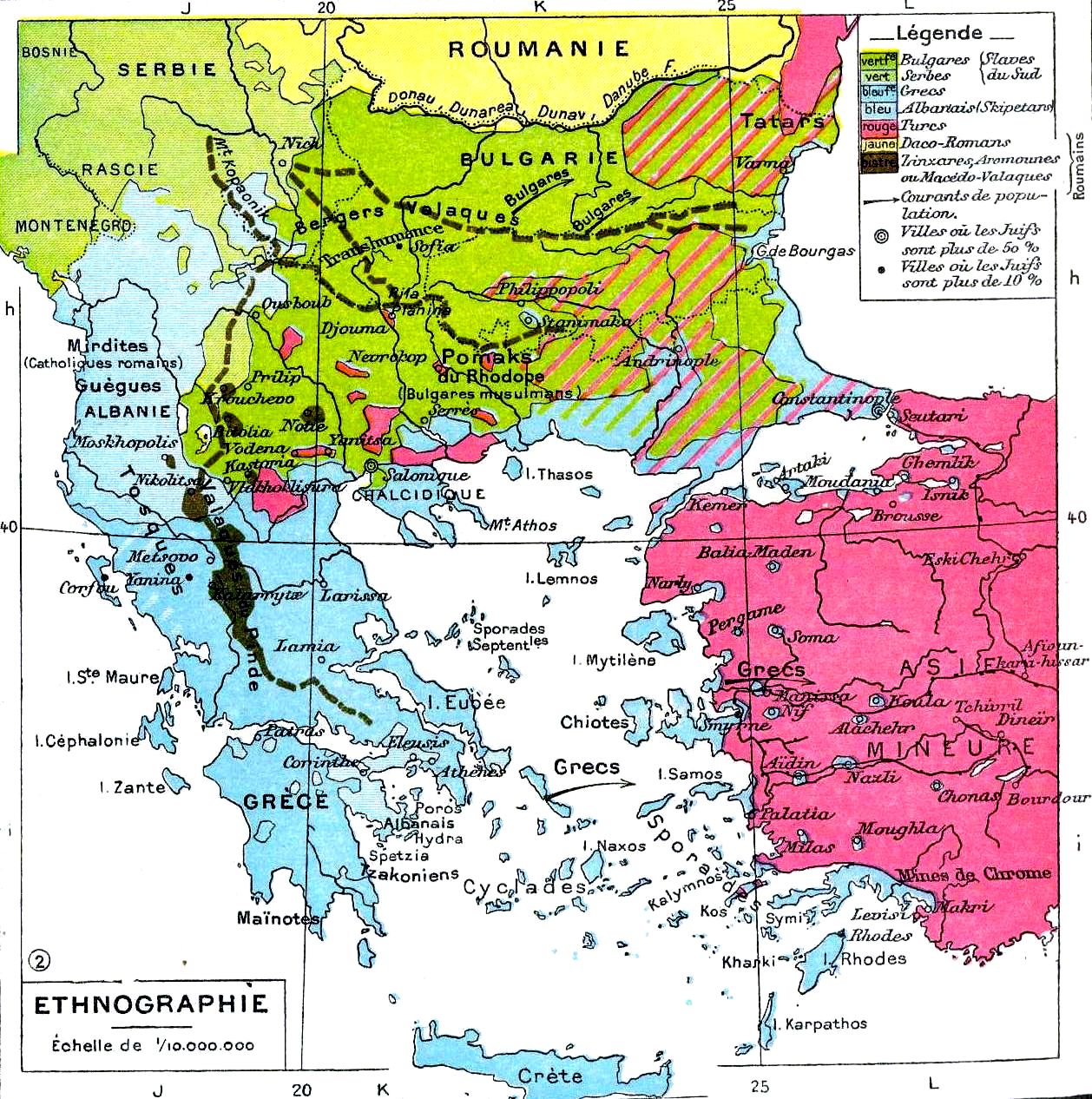
The Greeks shudder at the very sound of the word "Macedonian" being used in reference to anything non-Hellenic. The fact of the matter is that by the end of the Ottoman era the region of Macedonia was a cultural mosaic, inhabited by Bulgarians, Serbs, Greeks, Turks, Jews, Vlachs and others. When you live in Macedonia for 1400 years (Slavic tribes migrated to the Balkans around the 6th century AD), you don't need to be connected to the ancient Macedonians in order to associate yourself with the region.
For their part, many young FYR Macedonians appear to be unaware of their ethnological and linguistic proximity to Bulgarians. Many are also unclear regarding the different uses of the Macedonian descriptor: in antiquity to describe ancient Macedonians, who were Hellenic; during Roman, Byzantine and Ottoman times to describe administrative provinces; today to describe the Slav population who migrated to the Macedonia region and who, towards the end of the 19th century, began using the name of the region ("Macedonia") as part of their new national identity.
These people were vulnerable to rival national ideologies. About mid-nineteenth century, their spokesmen began to adapt the region's name as their national name and embarked on the daunting process of building a nation. It was from there, among the Bulgarian-speaking population of the time, that the Slav-Macedonians of today’s FYR Macedonia would emerge in the period between the two world wars. Their independence movement sought to create a single nation, uniting all inhabitants of the Ottoman Macedonian province regardless of language, religion or ethnic background. And in the age of nationalism, these Slav-Macedonians became simply Macedonians.
If the public understands and comes to grips with this, it will help politicians on both sides find a compromise without fearing a backlash from their constituencies.
This brings us to today and to why the people of FYR Macedonia certainly have legitimate ties to the
FYR Macedonia takes up 38% of the geographical region of the
FYR Macedonians have every right to a separate national identity, yet they do not represent all Macedonians. During the 1912-13 Balkan wars of independence, inhabitants of the Macedonian province picked the side alongside which the wished to fight. Greek Macedonians fought for independence alongside other Greeks and were hailed as Makedonomachi (Macedonian fighters). Their sacrifices and victories remain in history books, literature, novels and folk songs. Macedonians who aligned themselves with other nationalities were similarly honored by their respective people. FYR Macedonians too fought for independence. But the fact of the matter is that all other Macedonians in no way identify with the state that FYR Macedonians established after the dissolution of
Calling a Spade a Spade
FYR Macedonians are free to choose any name they wish for themselves. And they have as close a tie to the Macedonian region as the next Macedonian. But that also means they cannot monopolize the name. And now that they have become an independent nation, in order to be ethnically and historically accurate as well as respectful to all other Macedonians, the new state should differentiate its people by using a composite name. Reasonable suggestions could include Slavomacedonia, Upper Macedonia, Northern Macedonia or even New Macedonia (as in




15 comments:
The writer of the article is missing the point. The main issue of the disbute is not about the name, is about the Constitution of the fyr Macedonia and the teritorial, geographical maps, that the government of the fyr macedonia has introduced in their schooles.
This is a well written article, but there should be more references/sources for some of your key points.
But otherwise, it is balanced and non-biased.
I hope many see it and become educated on the issue.
The article seems to be well written....but keep in mind that it would be too easy to make such a separation....
basically, the article base its point of view about only ONE thing....the language used by the people of the region....
Keep in mind that the population of the macedonian region could speak 2 or 3 languages....
does the language make Ethnicity ?? not only....ethnicity is based upon a mulitude of factors which the language is only one of them....
On the other hand, people the article seems to show that people fought in the region of macedonia for a side, which it choose willingly...
One have to keep in mind that back in that time, Serbia, Bulgaria and Greece had political allies, as were Britain, Russia and Austra.
On the other hand, no such political help was given to the macedonian folk. Every single theory of the macedonians of today Republic of Macedonia is based upon Historical researchs of Historians that had to protect the interests of their own country.
The only reliable source that could be taken seriously would be the french one, because it didnt participate into the Balkan conflict.
As consequence, several books of french historians describe the Macedonian population, along with the Armenian one, as a single country, as a people on its own...
Hello and thank you for your comment. Would it be possible to point me to some of these French sources? Presumably they refer to the region's population pre-1900s, i.e. during the Ottoman or Byzantine times? If so, I would like to make sure they are taken into account. Thank you.
well done this is nicely written.
Congratulations for your article!
Nick Tsilikas
Nice article. I have a few objections, but it clearly shows a moderate and peaceful way of solving the issue
Nice article. Just keep in mind that the official FYROM maps in schools, hospitals etc. show a Macedonian state that includes northern Greece and western Bulgaria. Which means that these people look forward to "free" the rest of Macedonia, also implying that there are "Macedonians" under greek and bulgarian depression. But if you take a walk to Thessaloniki and ask various people whether they feel "depressed", I seriously doubt about getting a positive answer..
It is evident that the author of this article is trying to suggest a solution for the dispute from an objective perspective. The suggestion the author presents is: "the new state should differentiate its people by using a composite name." follwed by a short list of composite names.
I agree that this may be an adequate conclusion to the problem the way the author presented it.
But the author's presentation of the problem was wrong.
It is true that the greek objection to the name of the Republic of Macedonia is of cultural nature. The greek side accuses of theft of history, idenity and culture.
The Macedonian side has a quite different attitude, because they focus on a very different matter: the natural, human right of self-determination. When a group of people who live on a certain teritory elevates to the status of a sovereign country, nobody has the righ to tell that people how to name their country. That right belongs only to the people, the right of self-determination. So, according to this, the Republic of Macedonia's objection is not to greek historical and cultural claims but to the (in their view quite arrogant) determination if it's name by others.
Having said that, the author's solution (the list of suggested names) is the very core of what the Macedonians are refusing to accept. Thanks for trying though.
Pitty... the article is in wrong bases. first we dont know the author, and were did he get the right to give a solution when obviously,history is frustrated in his mind... To write an article with this theme you must know history more the one who giving you to school. Also the author making questions and he is not able to give answer and he make the things more complicated! After all this panic its happening to his article he is able to give a solution. New Macedonia isnt acceptable because if anyone has read history, should know that Macedonia always, from the ancient time were stoping it borders at Kilkis... Their country its SO FAR AWAY FROM THAT!
Can the Author please give us his nationality? I suspect very strongly that he is British!
If so let him come out with it.
I do agree on the name Nova Macedonia though.
Peter
Former Vice Consul of Great Britain and Northern Ireland
Hi Peter,
Thanks for your comment. I am actually American but have spent time in the UK, if that makes a difference.
Alex
my friend, thats not a major problem. you know the FYROM state demands provinces of the southern Macedonia which is Greek territory such as Thessaloniki (2nd biggest city of Greece) and Chalkidiki (a large peninsula of Greek land in the northen Aegean southeast of Thessaloniki) and homeland of Aristotle (Stageira). That areas has nothing to do with Slav history and are closelly connected to Ancient Greek history, philosophy, biology, literature things that are deeply sacred to us Greeks.
Cheers, Georgios
Alex,
Your article is well written, but allow me to disagree with you. The name Macedonia is Greek, and our neighbours should go back to using heir pre- 1940's name Vardarska. The French don't allow the word CHAMPAGNE to be used for anything other than sparling wine made is a specific french region, and we are going to allow a historic name to be used in vein? And, if they are sensitive, I am more sensitive. And, if it doesn't happen to your country, it's easy to write nice stories. NO THANK YOU!
Tell us a nice story about 911, and how you should have handled it tactfully and in a peaceful way. Oh, you went to WAR!!! Sorry we are uncivilized!
Dear,
Congradulations for your article. I only wish that politicians on all sides could have a point of view as objective as yours.
As a Greek who have lived and studied for many years in the U.S, i have always admired that particular way of thinking.
The things are almost exactly as you state them. I have one objection though. Even at the times of frenzy, when we wanted the copyright of the name Macedonia, no one in Greece(except 1-2% ultrareligious nationalists) claimed any territory of the neighboring Slavomecedonia. On the other hand a large percentage (above 70%) of the younger people of the neighboring country (ages 40 or less) honestly believe (after 50 years of communist type brainwash) that their country is divided in four parts, with one free (FYR Macedonia) and three parts occupied by Greece, Bulgaria and Albania.
We Greeks have failed to explain to the world this difference. That we were talking of historic and cultural rights on a name, whereas our neighbors were talking for territory!
This, in my oppinion, is the heart of the problem and this is the reason that a compromise solution is not likely.
The Greek government managed to persuade us that we do not have the copyright of the name Macedonia.
The government of FYR Macedonia, cannot (and does not want to) persuade their people that what they do not have ownership rights on the territory of all Macedonia.
If you study the history of this area from the late 19th century until today you shall see exactly that.
Greeks claimed rights and gained the territory of roughly the 92% of ancient Macedonia (50% of the Ottoman one), whereas the Slavs (Bulgarians or nowdays Slavmacedonians) always claimed rights on the 100% of the territory.
As a conclusion: I believe that the issue for our neighbors is (and has always been) a territorial one and not a cultural one. The name issue is the canvas for the redrawing of the borders.
And this is the reason that a straightforward and amicable agreement as you put it, is not likely.
PS1. We Greeks with our "short temper" we start always with a sentimental and maximalistic view, but before long we take a rational view on the issues. Therefore we have managed to survive whithout loosing our identity for 3000 years.
PS2. Mr Malevski's argument is nice but does not withstand to the scrutiny of logic for 2 reasons.
1. In their first constitution they have stated that they had the obligation to "care and support" the Slav-Macedonians in other countries and (moreover) they have chosen an ancient macedonian symbol (a star) as their flag. Since people live on the land and the abovementioned symbol was found only in Greek territory, both actions underline a territorial claim.
2. I can understand how the moderates lost power, but i do not understand how the nationalists could make the people believe that their country is occupied! In order to do this many years of intense propaganda are needed.
Post a Comment